
According to UCCS leaders, you don’t have to be techy to teach online.
Chancellor Pam Shockley-Zalabak, Mary Coussons-Read, executive vice chancellor, Academic Affairs, and Venkat Reddy, associate vice chancellor for online education and initiatives, Academic Affairs, outlined the university’s plan to rapidly increase the number of degree programs available online at a Feb. 17 all-campus forum.
According to Shockley-Zalabak, there was debate whether the CU System should create a fifth campus to drive online education, similar to CSU Global. In the end, it was decided that each campus would rapidly scale their online efforts to accommodate increasing demand.
“We are going to move forward very rapidly,” Shockley-Zalabak said. “But, we will retain control of the quality on our campuses, so that people that work in online education will be from our own faculty and staff.”
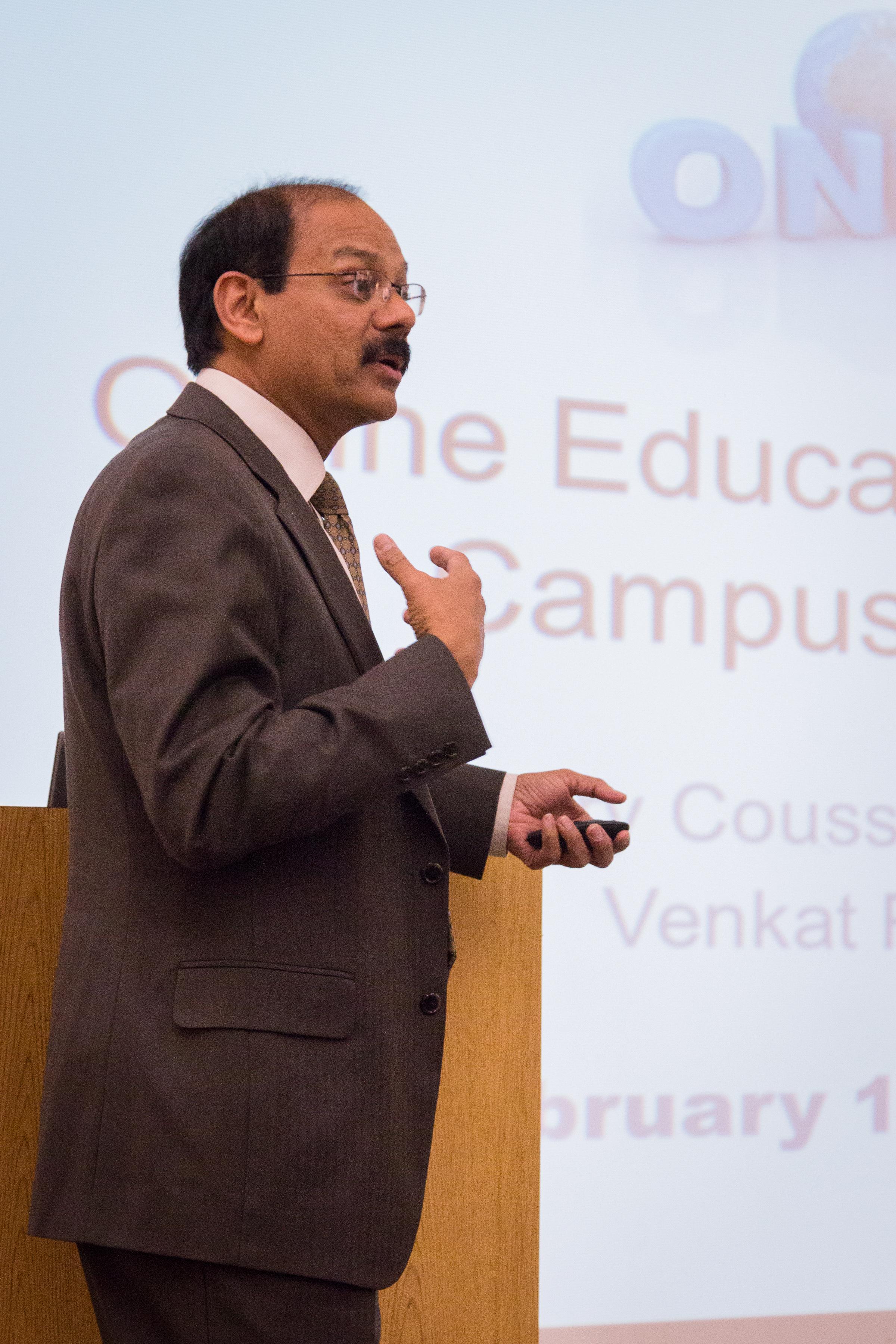
According to Reddy, the driving forces for increased services are a demand from current and prospective students, as well as expanded competition. A recent poll of academic leaders showed that 71 percent had either already developed online programs or were working on getting involved.
Online education isn’t something new to CU. UCCS currently offers eight master’s and doctoral-level fully online programs, as well as five undergraduate degree completion programs and 21 certificates. By comparison, CU Denver offers 17 fully online degrees and 11 certificates, and no degree completion programs. CU-Boulder offers seven fully online degrees and 23 certificates and no degree completion programs.
The newly laid road map has UCCS developing nine new undergraduate and two masters level courses by 2018, bringing the total number of fully online degrees to 17. CU-Boulder plans to add nine new programs, while CU Denver will add five.
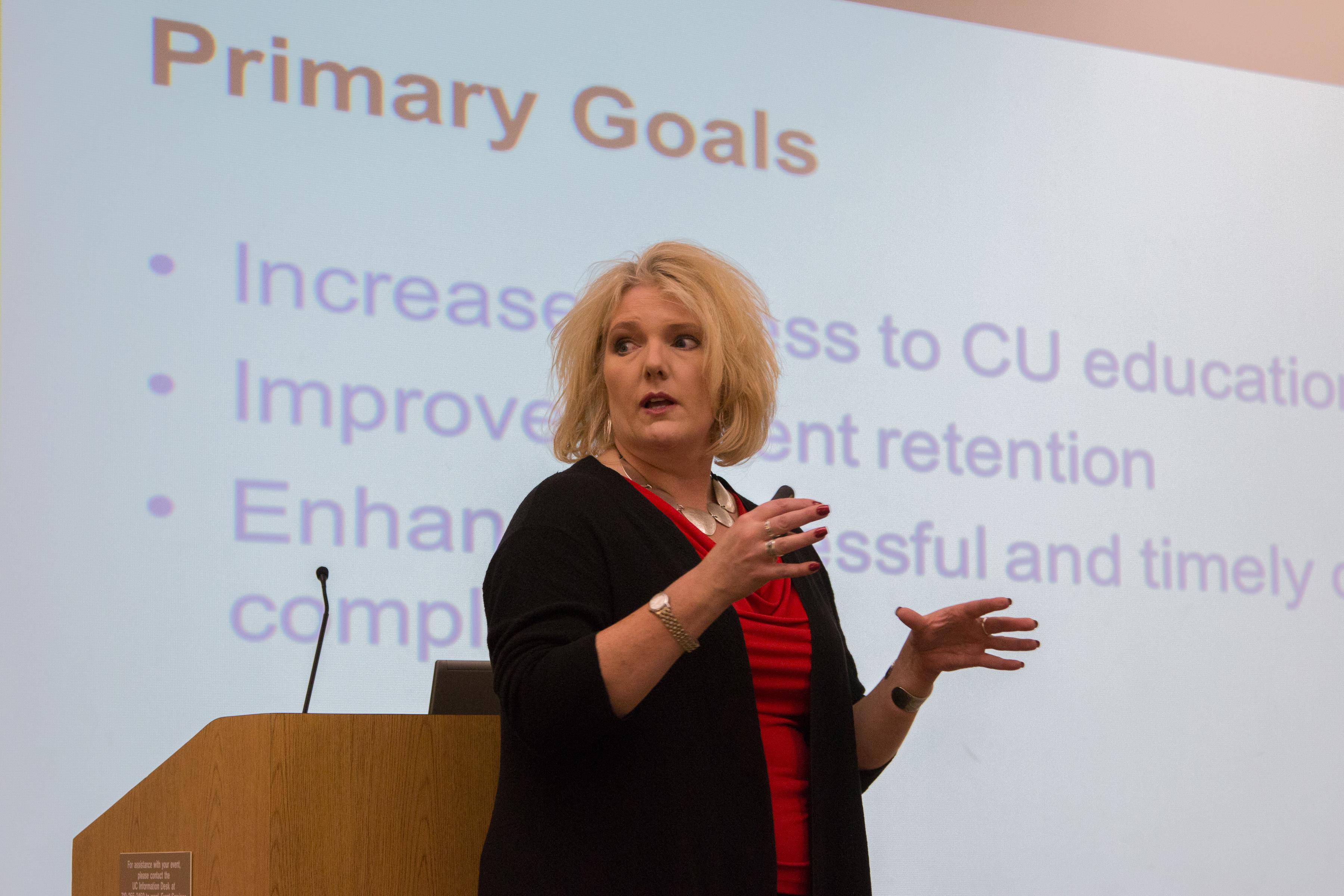
The main challenge that comes with such growth is maintaining high quality. According to Coussons-Read, Academic Affairs is working at the college level to ensure that faculty are involved in the process.
“This effort really is keeping the focus of the program development, the program control and the program quality at the campuses, and with the faculty and staff,” Coussons-Read said. “Schools and college will own their curricula and faculty will steward their course content.”
Another challenge that the campuses face is faculty who are inexperienced or hesitant to teach online. But according to Reddy, you don’t have to be “techy to teach online.”
The Faculty Resource Center, along with instructional designers in each college, provides educational technology assistance and online teaching workshops.
A Teaching with Technology Committee was created to work with the Faculty Resource Center to provide help faculty transition. Some of those resources will be shared across campuses through newly developed Centers for Excellence.
“Unlike an in-class experience, online classes really is a team effort,” Reddy said. “We’re not expecting faculty to become technology experts. They’ll need to lean on the instruction designers who have the experience in this to delegate the class content to their students.”
For more information about the current programs UCCS offers online, visit www.uccs.edu/online.
Related articles
- Reddy to lead online course initiative
- UCCS graduate online programs ranked among nation’s best, top in Colorado
— Photos by Philip Denman
Leave a Reply