
A new curriculum at UCCS and Pikes Peak Community College will place students in the midst of history as they assume roles of ancient leaders and build relics of the past with their own hands.
Called “Reacting to the Past,” the UCCS and PPCC history curriculum efforts are funded by a $100,000 grant from the Colorado Community College System announced March 6. As part of the curriculum, students are no longer passive observers of history. Instead, the curriculum, which was first developed at Barnard College, New York City, immerses students in the subject.
Reacting to the Past is a game-based curriculum where students take on the roles of key historical characters at critical moments in history. It is interdisciplinary in that students read primary works and argue their objectives in an effort to negotiate a series of debatable issues, according to Roger Martinez, assistant professor, Department of History, and the grant’s co-principal investigator.
“The Reacting to the Past teaching method does more than transmit knowledge to students — it places them back in history where they actually live it and feel it,” Peter Braza, dean, College of Letters, Arts and Sciences, said. “Through this program, students become better informed and are thus more able to make strong oral and written arguments, skills that future employers value. These skills can also translate into our students becoming more reflective citizens.”
Martinez will work in conjunction with PPCC’s Glenn Rohlfing, who earned bachelor’s and master’s degrees in history from UCCS in 2002 and 2005.
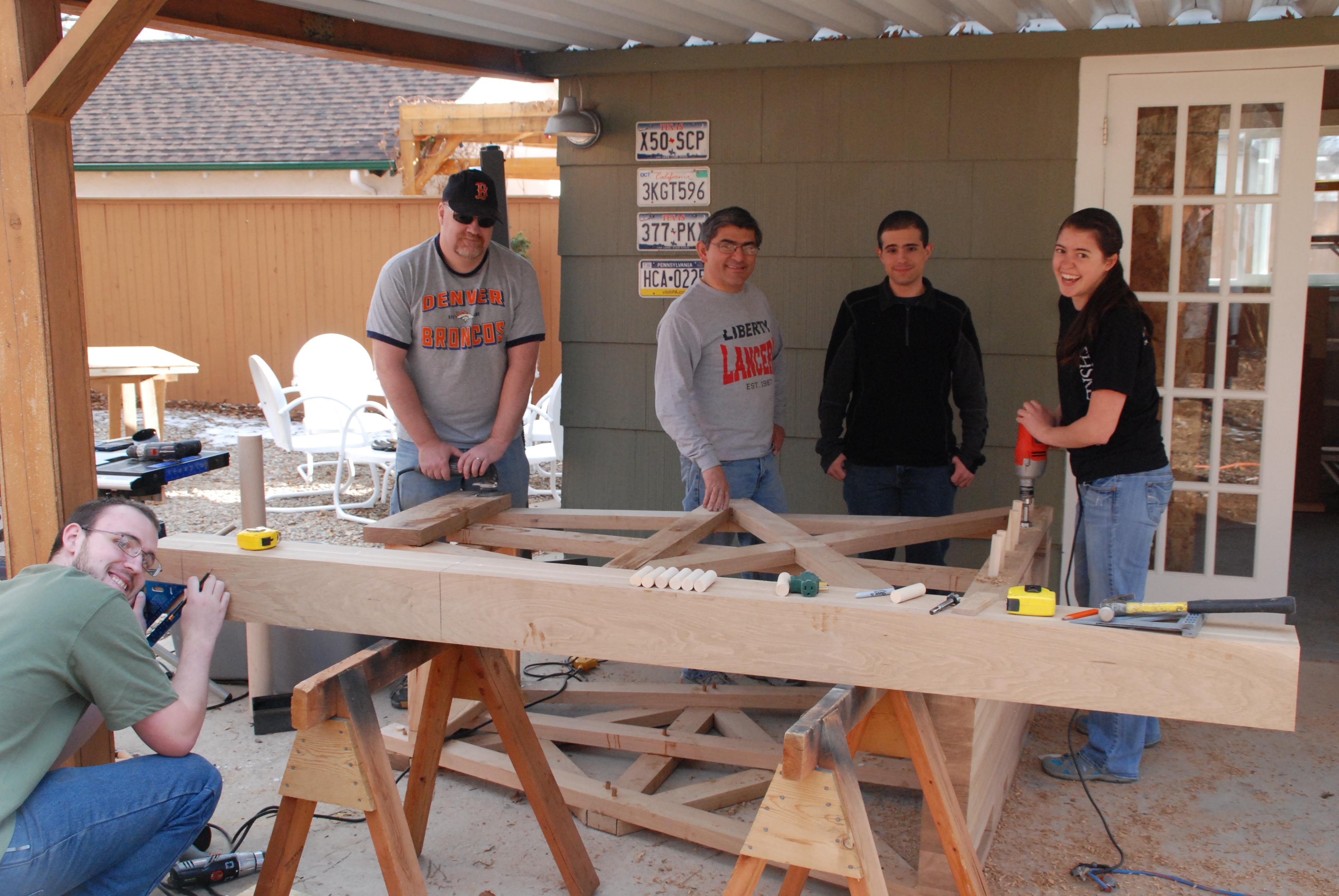
Martinez is well known for his efforts to help students build a 13th century Cantigas de Santa Maria Trebuchet, a weapon that hurled projectiles at opponents. The weapon was popular until the adoption of gunpowder. Helping students build an ancient weapon is part of “hands on” history learning and the Reacting to the Past curriculum. The students in Martinez’s History 4160 course shared the trebuchet Feb. 27 in a campus ceremony that included costumes and an “invitation to the queen” (Chancellor Pam Shockley-Zalabak) to see the invention of her military forces.
See a video of the trebuchet in action
“Should Charles Darwin win the Copley Medal; is his argument in Origin of Species inductive or deductive reasoning?” Martinez said. “Questions like these allow students to take control of the classroom, and experience deep learning of critical historical, philosophical, scientific, theological, anthropological, sociological, and geological themes.”
For students, the changes in the history curriculum have proven popular.
“I learned to plan ahead to win debates and secure support for my position,” Zachary Rogers, an Elizabeth junior, said. “RTTP is great because it places you in the past and allows you to get into the role, to become the character and learn what he believed, thought, and acted. Learning to communicate your ideas and garner support for them will be useful in almost any job.”
Devin Kinsey, a Colorado Springs sophomore, said: “I learned new ways to conduct research and develop different ideas about the time period based on the personality and beliefs of my character. The game made me think more in depth about what went on in the minds of the historical figures.”
Rogers and Kinsey were students in the course “Ideas, Identities & Indiscretions: Transformations in Early Modern Europe (1400-1800).” Their game was “Reacting to the Past’s The Second Crusade: the War Council of Acre, 1148.”
A Reacting to the Past Regional Conference will take place at PPCC on April 19 -21, where faculty will learn the curriculum firsthand. In addition, Nicolas Proctor of Simpson College will host a one-day workshop on April 21 to train faculty on how to develop games for the curriculum.
For details about the conference, contact Martinez, 255-4070, or [email protected]
Leave a Reply