
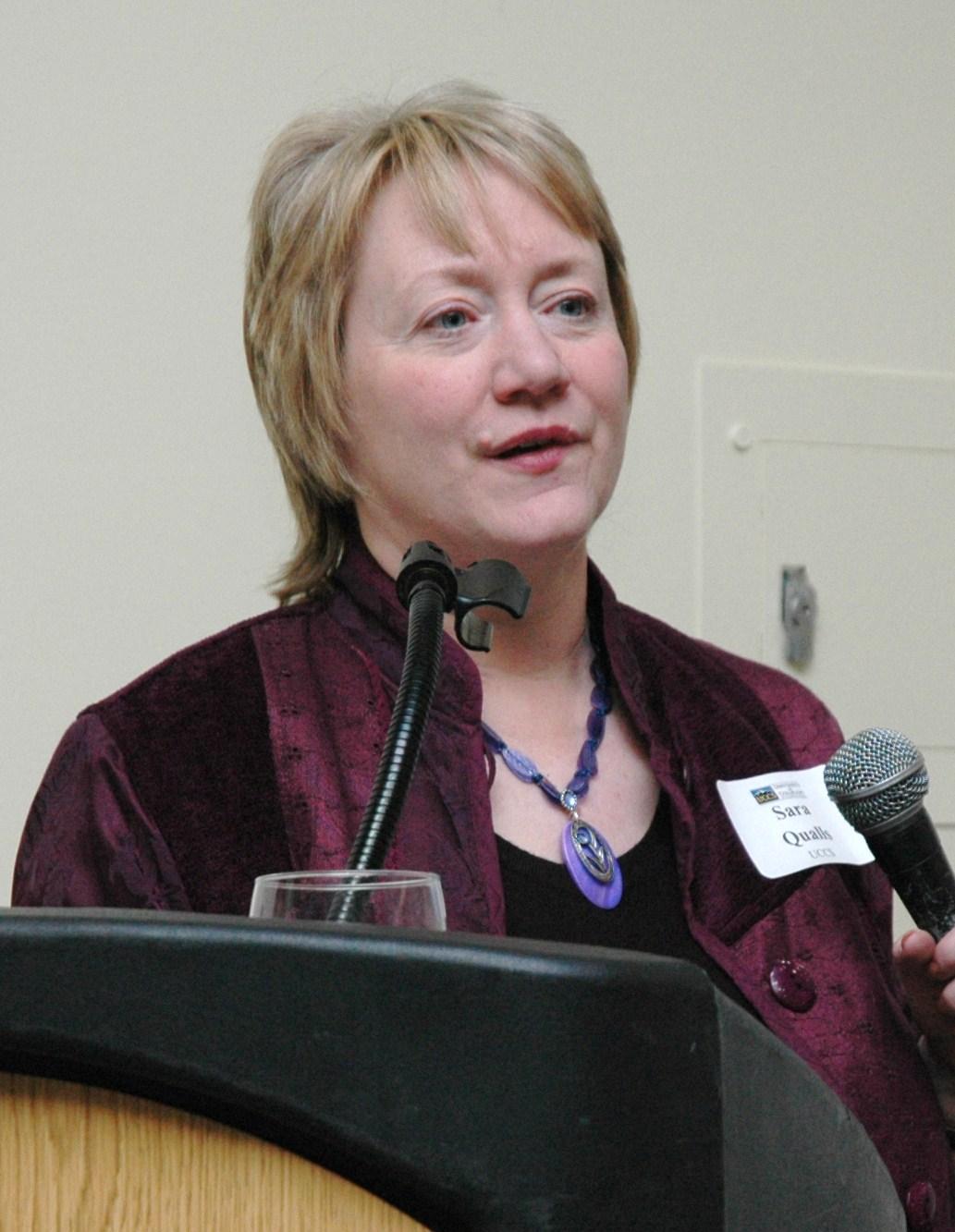
 There is a worldwide revolution taking place, Sarah Qualls, Kraemer Family Professor of Aging, told a group of community and business leaders Thursday.
But it is not a revolution fought with guns or swords. The revolution is one of wrinkles, gray hair, bifocals and hearing aids.
“We are the aging revolution,” Qualls said. “We’ve never seen a demographic shift this dramatic.”
Qualls was the keynote speaker at Thursday’s University Club luncheon. University Club members are community and business leaders. She paralleled changes across the world where the fastest growing population is among people more than 60 years old. Soon, one in five humans will be more than 60. The change represents challenges for employers and, for those who understand the needs and wants of aging Baby Boomers, opportunity.
“Who’s in the work force? “ Qualls asked. “We’ve lost 10 percent in 35 44 age group and gained by 73 percent the size of the workforce in the 55 to 64 year old group who will be retiring soon. Occasionally, you’ll read an article about the potential for brain drain. This is what they are talking about.”
[audio:https://communique.uccs.edu/wp-content/uploads/2010/03/U-club-1.mp3|titles=U club 1]
Because of shifts in the number of workers, Qualls encouraged business leaders to redefine retirement to “career de-acceleration” where older workers continue to contribute to organizations, though not in the same ways as they did when they were 30 or 40 years old. Part-time or contract work is desired but it must be meaningful, she said, “not stuffing envelopes.”
She also encouraged businesses to make accommodations for older workers to help them remain productive.
“Men’s hearing peaks at 30, women at 38 but declines after that,” Qualls said. “It’s similar with vision. And half of people over 65 have arthritis. An older workforce will require accommodations.”
[audio:https://communique.uccs.edu/wp-content/uploads/2010/03/U-club-2.mp3|titles=U club 2]
Additionally, Qualls encouraged employers to recognize differences in generations and their approaches to both work and to saving money. Understanding those differences can create a more successful organization as can the realization that many younger employees are also providing care for an aging parent.
Citing her personal example of caring for aging parents in Illinois, Qualls encouraged business leaders to consider such options as telecommuting and sick leave policies that allow for care of extended family members.
University Club members will move from discussions of aging to seeing the application of theory at practice. At an April meeting, the group will tour Palisades at Broadmoor Bluffs, a senior living community that is a partnership with UCCS.
Leave a Reply