
 As most of the world prepares to be spectators for the Winter Olympics in Sochi, three with UCCS ties are actively involved in the Feb. 7-23 global sports event.
For months, Nanna Meyer, associate professor, Beth-El College of Nursing and Health Sciences, has been working with Olympic athletes and specifically, the members of the speed skating teams as a nutritional consultant. She is joined in Sochi by Darrin Steele, instructor, College of Business. Steele is the chief executive officer of USA Bobsled and Skeleton. He teaches part-time in the UCCS Sport Management Program.
But the cameras will be focused on Jason Brown, a Monument freshman, who burst onto the scene with a second place finish at the figure skating nationals and earned a place on the Olympic team. Barely 19, Brown surprised many with his performance and placement ahead of many better known skaters.
A native of Highland Park, Ill., Brown lives and trains in Monument. He completed the fall semester at UCCS, taking courses in English and Japanese.
See the performance that qualified Brown for the Olympics, a YouTube sensation that has garnered more than 3 million views.
For Meyer, Sochi is the culmination of months of preparation. As a nutritional consultant, Meyer is an integral part of the strategy to create champion skaters. She works to ensure the athlete’s diets prepare them for success.
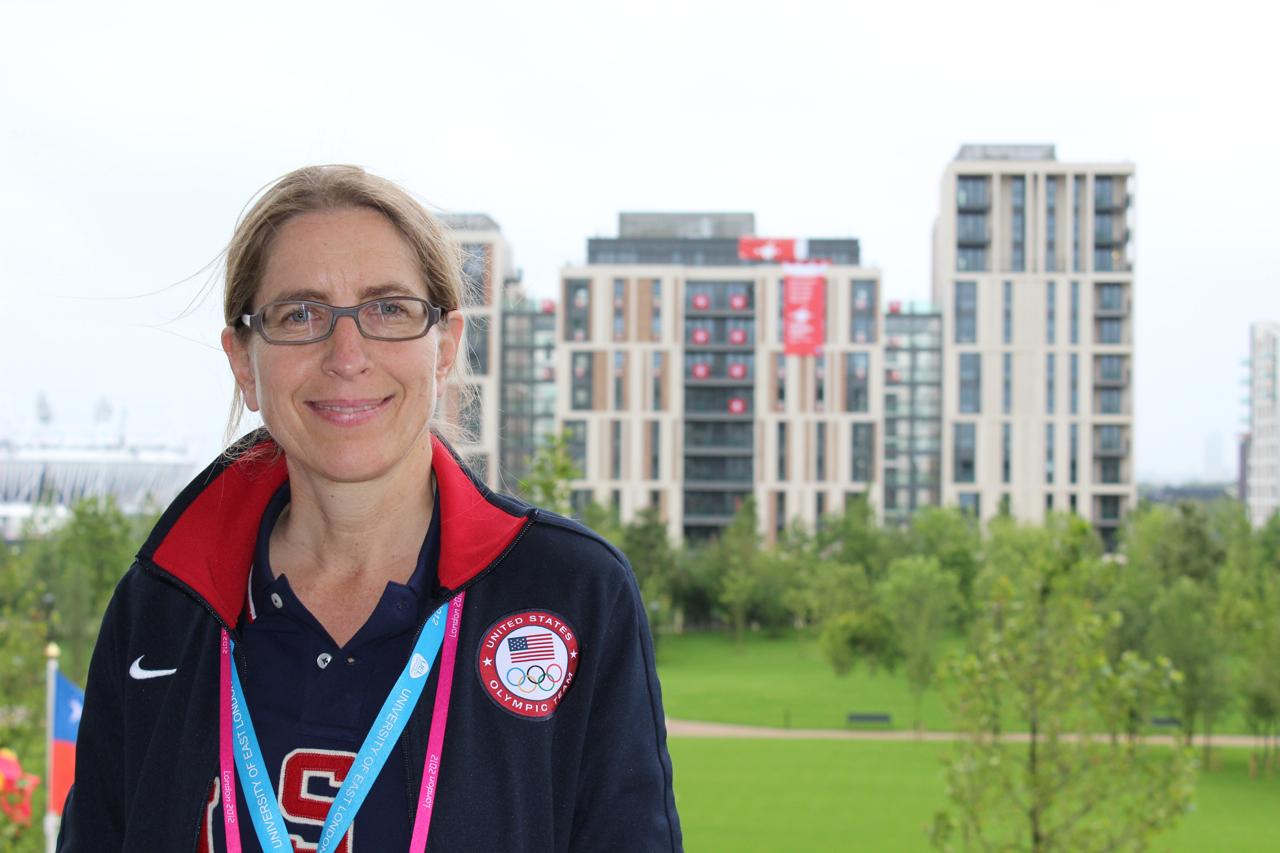
“They are pushing physiological limits,” Meyer said of the speed skaters. “Their diet is an important part of making them successful.”
Some men long track speed skaters consume as many as 6,000 calories daily, triple that of the average man, she said. Meyer will support skaters with familiar foods brought overseas to supplement the meals consumed in the Olympic Village dining hall in Sochi and works with team members throughout the year to teach them how to cook for themselves, arranges for farm-to-table foods, and even assists with special diets to help those who get colds or flu or those needing extra support because of dietary restrictions.
The road to Sochi and the Olympics is a long one. Earlier this month, Meyer was in Italy and Germany for pre-stage camps and made two previous trips to Sochi as part of preparations.
Meyer plans to blog from Sochi. Her posts are available at www.sochiatuccs.blogspot.com.
Steele competed in the sport of bobsled for five years before becoming the CEO in 2007. His career highlights are a12th place finish at the 1998 Olympics in four-man bobsled and ninth in the 2002 Olympics in two-man bobsled with driver Brian Shimer.
Since 2010, Steele has taught part-time in the Sports Management Program, teaching Introduction to Sport Management. He is also a doctoral student in the College of Education.
This year’s USA Men’s Bobsled team is hopeful to bring home a gold medal, the first since 1936, following a partnership with BMW to create a new 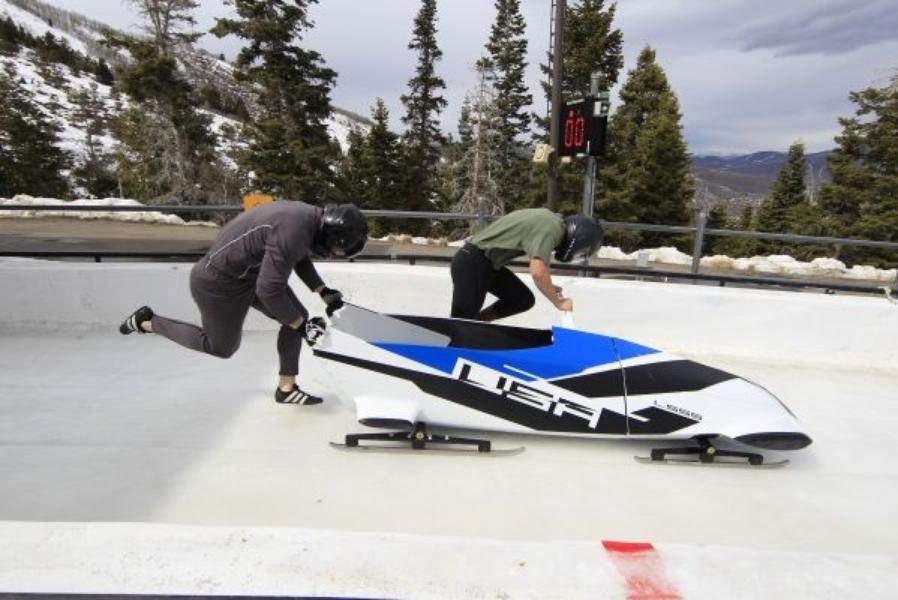 sled that uses the same carbon fiber as used in BMW electric cars as well as an aerodynamic shell perfected in the company’s wind tunnels.
Celebrating the Olympics
Opening ceremonies will be broadcast on a 17 foot screen in downtown Colorado Springs beginning at 5 p.m. Feb. 7. The U.S. Olympic Committee, city of Colorado Springs, Downtown Development Corp. and Colorado Springs Sports Corp. are planning a street party to celebrate the Winter Olympics and the Colorado Springs connection.
The UCCS graduate program in sport nutrition will also bring the Olympics closer to campus. At 2 p.m. Feb. 7 in the University Center Theater, Jackie Berning, professor, Department of Biology, will lead a discussion about sport nutrition. She will be joined by several graduate students. On Feb. 12 and 19, the graduate students will host tables near Café 65 in the University Center to share borscht and other foods representative of Sochi and Russian food culture.
The opening ceremony will have special meaning for many including Mike Hiskey, assistant professor adjoint, Department of Chemistry and Biochemistry.
Hiskey lectures on pyrotechnics in advanced chemistry courses and teaches chemistry lab courses where he explains that chemistry is the basis of the sparkle in fireworks. Hiskey works for New Mexico-based DMD Systems, a contractor to Disney Company. At an Alabama plant, DMD built the fireworks that will be used at both the opening and closing ceremonies in Sochi. The company is known for creating fireworks with brilliant colors but with low smoke levels and without dangerous perchlorates, lead or mercury, chemicals that are commonly used but can be environmentally hazardous.
“Everything is in place,” Hiskey said. “I hope everyone enjoys the shows.”
Leave a Reply