
In 2018, local leader and healthcare CEO Margaret Sabin approached the Wellness Center at UCCS with a proposition. According to a Colorado Health Institute report in 2018, suicide was the number one cause of death for people ages 10-24, and Sabin wanted to tackle that growing issue.
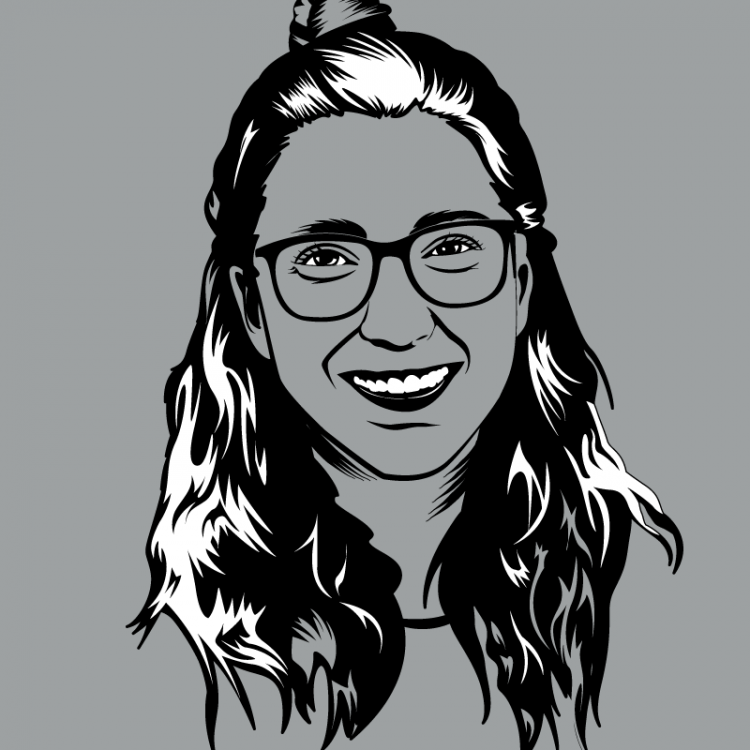
Enter Morgan Lavender. Freshly admitted to the health promotion master’s program at the Helen and Arthur E. Johnson Beth-El College of Nursing and Health Sciences, Lavender was looking for work on campus. A job at the Rec Center’s front desk caught her eye. She had done desk-type jobs before, and how hard could it really be? But she was shocked to find that she had been rejected for the position.
“I was bummed when I didn’t get the job. I was thinking ‘what in the world?! I know I’m good at this,’” said Lavender, “but instead I received a call from Stephanie Hanenberg.”
Instead of a desk job, Hanenburg offered Lavender a position as a resiliency programmer. Hanenburg told her they needed someone with a background in psychology and a passion for mental and holistic health and helping students.
It was a dream come true for Lavender. She came to UCCS with a bachelor’s in sport psychology from Florida State University and a bachelor’s in health sciences from the University of South Florida. With goals of being a physical therapist while working on her second bachelor’s, Lavender found herself having conversations with clients who described their non-physical problems getting out of bed in the morning.
“They’d tell me it was so hard to get out of the bed in the morning, but not because of any physical injury they had, but because they were depressed,” said Lavender.
This reality stuck with her, and she couldn’t comprehend why there wasn’t a more mind-body and holistic approach to health and medicine in general. The health profession seemed so focused on treating physical maladies that mental health often flies under the radar.
In her final year working on her second bachelor’s at USF, it came time to start considering graduate programs she’d like to continue her education in.
“Immediately after I took the GRE, I sat in my car and googled ‘health programs,’ found the health promotion master’s at UCCS, called the program advisor right then and there, and that’s how I ended up here,” Lavender explained.
As the graduate assistant for resilience at the Wellness Center, Lavender oversees programming to instill a better sense of resiliency in the student population at UCCS.
“The resiliency program has turned into this happiness program,” says Lavender, “and with the happiness program, we’ve created a workbook – a Happiness Workbook – that tries to instill healthy coping skills in students by teaching them methods like meditation, mindfulness, practicing forgiveness, optimism, gratitude and more.”
The workbook Lavender mentions is utilized by the “How of Happiness” groups at the Wellness Center, an empowering 8-week group program that seeks to utilize current research on what does (and does not) make people truly and sustainably happy.
On the impact of her work as a graduate assistant on campus, Lavender said: “This job has helped me grow in so many ways. I had no idea that suicide prevention and action would be one of my passions until I took this opportunity.”
When asked what’s next for her after her graduation in May, Lavender said, “I just know that I want to continue making an impact. I think my dream would be to work with the community and specifically do mental health programming and eventually do policy work. Although I also love working with individuals and would love to have my own health coaching and yoga practice one day.”
Two days after her interview with us in January, Lavender had the opportunity to speak at the Call to Action event hosted here at UCCS, a community-wide event of over 500 people that raises awareness for suicide prevention. This event is part of the first phase in a five-year plan to lower suicide rates in Colorado Springs.